Enterprise AI transformation has moved beyond experimentation. Organizations are no longer asking whether artificial intelligence can improve productivity, decision-making, customer engagement and operating efficiency; they are asking how to adopt it responsibly, repeatedly and at scale. A Client Zero strategy offers a practical answer to this challenge. In this approach, an enterprise becomes the first serious user of its own AI capabilities, platforms, governance models and operating practices before extending them to customers, partners or external markets. It is a disciplined form of internal-first transformation, where the organization uses itself as a proving ground for value creation, risk management, adoption patterns and enterprise readiness.
The strength of Client Zero lies in its realism. AI initiatives often look convincing in demonstrations, controlled pilots or innovation labs, but enterprise environments are rarely neat. They contain fragmented processes, uneven data quality, legacy systems, security constraints, cultural resistance, fragmented accountability and regulatory obligations. By applying AI internally first, the enterprise learns where its assumptions fail, where its architecture needs reinforcement and where employees need support. These lessons become reusable transformation assets, including reference architectures, governance templates, reusable agents, adoption playbooks, training pathways, measurement frameworks and change management models.
Understanding the Client Zero strategy
Client Zero is more than a limited technology pilot. A normal pilot may prove that a tool works in a narrow setting, but a Client Zero model tests whether an enterprise transformation approach can withstand real operational pressure. It brings together people, process, technology, governance, security, compliance and economics in one practical learning environment. Because the organization is both the sponsor and the first user, the accountability is sharper. When an internal AI solution improves productivity, quality, risk control or experience, the enterprise gains evidence that can be used credibly in later client-facing programs. This aligns with broader industry guidance that enterprise AI value depends on governance, measurable outcomes and practical adoption rather than isolated experimentation.
This strategy matters even more for AI because AI systems are probabilistic, context-sensitive and dependent on the quality of enterprise knowledge. They cannot be assessed only by checking whether they execute a fixed instruction correctly. Leaders must examine accuracy, explainability, fairness, privacy, security, grounding, cost behavior, human oversight and the consequences of AI-supported decisions. A Client Zero environment gives the organization a realistic but still controlled setting to observe these factors before expanding AI into customer-facing or mission-critical work. The need for such discipline is consistent with responsible AI guidance from Microsoft, IBM and NIST, which emphasizes accountability, risk assessment, transparency, monitoring and human oversight across the AI lifecycle.
Approaches in a Client Zero strategy
A successful Client Zero strategy should begin with use cases that are tied to measurable business value. Enterprises should be careful not to start with fashionable AI ideas simply because they attract attention. The better approach is to identify work patterns where AI can reduce manual effort, improve decision quality, shorten cycle time, enhance employee experience, strengthen compliance or open new revenue opportunities. These opportunities should be prioritized through a balanced lens that considers business impact, technical feasibility, data readiness, risk exposure, reuse potential and scalability. The objective is not to run dozens of disconnected experiments, but to create a focused set of internal success stories that can be scaled with confidence.
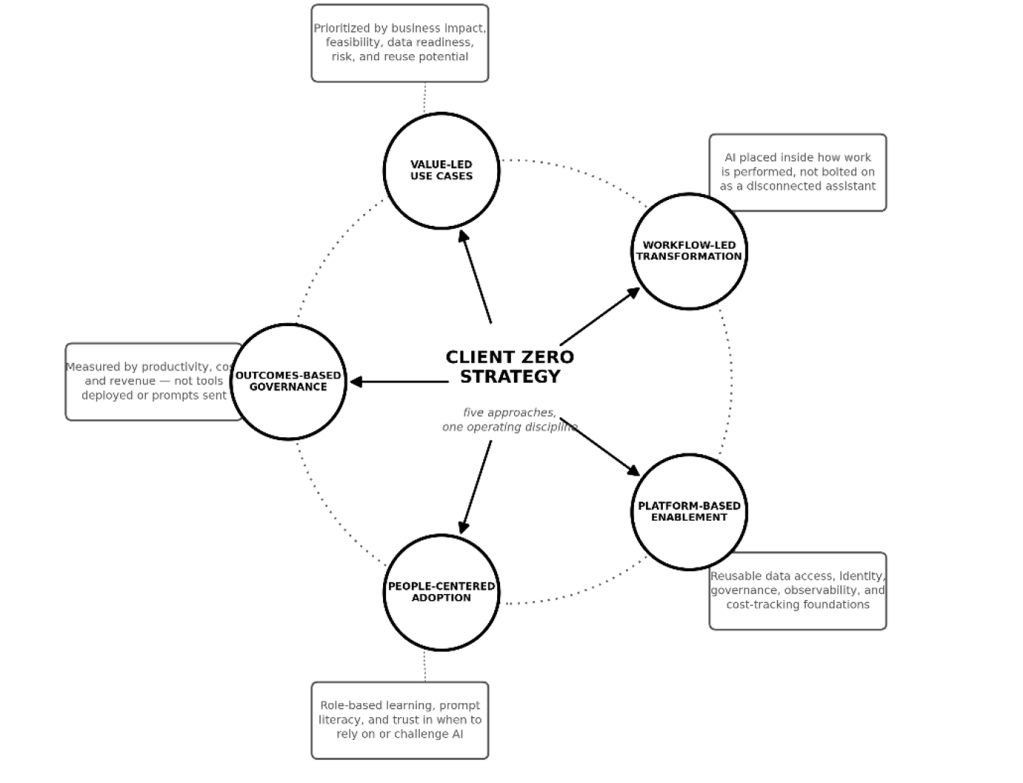
Figure 1: Five approaches in Client Zero strategy.
Magesh Kasthuri
Another essential approach is workflow-led transformation. AI should be placed inside the way work is actually performed, not bolted on as a disconnected assistant outside the process. For instance, an enterprise may rethink employee support, sales enablement, software engineering, finance operations, procurement, IT service management or knowledge discovery by redesigning the workflow around intelligent assistance, automation, human review and outcome measurement. This prevents AI from becoming a novelty tool and instead positions it as a practical mechanism for improving how work gets done. McKinsey and Harvard Business Review both stress that AI value increases when organizations redesign workflows and operating models rather than merely distributing new tools.
A third approach is platform-based enablement. Enterprise AI should rest on reusable foundations such as secure data access, identity-aware authorization, model governance, prompt and agent lifecycle management, observability, cost tracking, responsible AI controls and integration patterns. Without these foundations, every team tends to create its own local version of AI adoption, which leads to duplicated effort, uneven controls and growing operational risk. A Client Zero organization should therefore treat internal adoption as a way to harden its AI platform and define reusable patterns for later business-unit and client programs. Microsoft’s Cloud Adoption Framework, IBM’s governance guidance and NIST’s AI Risk Management Framework all reinforce the importance of repeatable controls, risk management and lifecycle oversight.
A fourth approach is people-centered adoption. AI transformation often disappoints when employees experience it as a tool rollout rather than a genuine redesign of work. Client Zero should therefore include role-based learning, communities of practice, prompt literacy, ethical usage guidelines, practical examples and trusted feedback channels. Employees need to know not only how to use AI, but also when to trust it, when to challenge it, when to escalate and how to combine machine-generated output with professional judgment. This human-centered discipline reflects the broader industry view that adoption, trust, learning and change management are central to sustainable AI transformation.
A fifth approach is outcomes-based governance. Client Zero should not be evaluated only by the number of AI tools deployed, users onboarded or prompts submitted. The stronger measure is whether the program improves business outcomes, such as productivity, cost performance, revenue influence, customer satisfaction, decision speed, software quality, incident reduction, compliance cycle time and employee experience. This outcome discipline helps leaders separate meaningful transformation from surface-level adoption. It also ensures that AI investment conversations remain grounded in evidence, value realization and accountable ownership, themes repeatedly emphasized by McKinsey, Deloitte and CIO.com.
Risks and mitigation plans
A Client Zero strategy reduces uncertainty, but it does not remove risk. In practice, it brings risks to the surface earlier because AI is placed within real internal operations. That visibility is valuable only when the enterprise is ready to respond with strong governance and disciplined execution. Business risks may appear through unclear ownership, weak value tracking, employee resistance, poor communication, excessive dependence on automation or unrealistic executive expectations. Technical risks may arise from data leakage, hallucinated outputs, weak integration design, limited monitoring, cost overruns, poor explainability or insufficient controls over agents and autonomous workflows. NIST, Microsoft, IBM and the World Economic Forum all highlight the need to manage these risks through accountability, transparency, monitoring and proportionate controls.
The mitigation plan should combine prevention, early detection and controlled response. Prevention includes secure architecture, policy guardrails, approved data zones, role-based access, responsible AI reviews and careful use case selection. Detection requires continuous monitoring of model behavior, adoption quality, user feedback, cost patterns, bias signals, exceptions and policy violations. Controlled response involves fallback procedures, human review, incident management, model rollback, retraining cycles and clear escalation routes. The intention is not to slow AI adoption but to make it safe, auditable and reliable enough to scale. This approach is consistent with NIST’s govern-map-measure-manage structure and Microsoft’s guidance on integrating AI governance with broader risk management processes.
| Risk Category | Possible Risk | Potential Impact | Mitigation Plan |
| Business Risk | Unclear value realization | AI initiatives may consume budget without demonstrating measurable improvement. | Define baseline metrics, expected outcomes, benefit owners and review checkpoints before implementation. |
| Business Risk | Employee resistance and low adoption | Users may avoid AI tools or use them inconsistently, reducing transformation impact. | Provide role-based training, transparent communication, feedback channels and visible leadership sponsorship. |
| Business Risk | Overautomation of judgment-heavy work | Critical decisions may be made without sufficient human review, increasing operational and reputational exposure. | Classify decisions by risk level and mandate human approval for sensitive, regulated or high-impact actions. |
| Business Risk | Misalignment between business units | Different teams may develop competing or duplicated AI solutions. | Create an enterprise AI council, common prioritization framework, reusable patterns and shared funding principles. |
| Business Risk | Unrealistic executive expectations | Leadership may expect immediate enterprise-wide returns from early-stage adoption. | Set a staged roadmap, communicate learning milestones and separate pilot value from scaled transformation value. |
| Technical Risk | Data privacy and leakage | Sensitive enterprise or customer data may be exposed through prompts, logs, connectors or model interactions. | Use approved data zones, encryption, identity-based access, prompt filtering, data loss prevention and audit logging. |
| Technical Risk | Model hallucination and inaccurate output | AI recommendations may be misleading, incomplete or factually incorrect. | Apply retrieval grounding, confidence scoring, source traceability, validation workflows and human review for critical outputs. |
| Technical Risk | Weak integration architecture | AI solutions may fail when connected to legacy, fragmented or unstable enterprise systems. | Adopt API-led integration, reference architecture patterns, resilience testing and staged rollout across systems. |
| Technical Risk | AI cost escalation | Token usage, infrastructure consumption and licensing costs may grow faster than expected. | Implement usage quotas, model selection policies, cost dashboards, caching, prompt optimization and FinOps controls. |
| Technical Risk | Insufficient monitoring and observability | Performance drift, security anomalies and adoption issues may remain undetected. | Track model quality, latency, cost, user feedback, exceptions, data drift and policy violations through centralized monitoring. |
Roadmap for adopting a Client Zero strategy
The roadmap should begin with strategic alignment. Leaders must clarify why the organization is adopting Client Zero, which enterprise outcomes matter most and where AI can create credible value. This stage includes identifying priority domains, assessing data and platform readiness, defining responsible AI principles and establishing executive sponsorship. A clear transformation charter should describe the ambition, scope, governance model, funding approach, risk tolerance and success metrics. Gartner, McKinsey and Deloitte all point to the same underlying lesson: AI programs scale better when leadership moves beyond experimentation and connects adoption to business priorities, governance and value realization.
The second stage is discovery and portfolio design. Business and technology teams should map internal processes, identify friction points, evaluate data availability and select use cases that balance impact with feasibility. The best candidates are often repetitive, knowledge-intensive, measurable and bounded enough for safe experimentation. At this stage, the enterprise should classify use cases by risk level so that low-risk productivity scenarios can move quickly while sensitive decision-support scenarios receive stronger oversight. This portfolio discipline reflects guidance from TechTarget, NIST and Microsoft on prioritization, risk classification and oversight.
The third stage is foundation building. This includes establishing secure access to enterprise data, defining model and platform standards, integrating identity and access controls, creating prompt and agent management practices and putting observability in place. The enterprise should also define reusable design patterns for retrieval-augmented generation, intelligent agents, human review, auditability and cost control. These foundations reduce duplication and prevent early success from becoming later complexity. IBM and Microsoft both emphasize that scalable AI requires a disciplined base of governance, data protection, lifecycle management and operational monitoring.
The fourth stage is controlled internal implementation. Selected use cases should be implemented with clear release boundaries, pilot groups, feedback loops and operating metrics. Teams should track not only whether AI produces helpful outputs, but also whether employees change their work habits, whether managers trust the results, whether risks are being controlled and whether business value is visible. Lessons from this stage should be documented as reusable playbooks instead of remaining project-specific knowledge. Deloitte and CIO.com both note that moving from pilots to scaled adoption requires practical learning, adoption support, governance and patience.
The fifth stage is industrialization and scaling. Once the enterprise has validated a pattern internally, it can expand the model across functions, geographies, processes and business units. Scaling should be supported by stronger governance, reusable assets, training programs, support models and a value realization office. This is also where Client Zero learning can become market-facing capability through advisory frameworks, accelerators and reference stories. McKinsey, World Economic Forum and Gartner research all suggest that the organizations gaining the most from AI are those that convert lessons into repeatable operating models rather than treating AI as a series of disconnected pilots.
The final stage is continuous improvement. AI transformation does not end when tools are deployed. Models evolve, regulations change, business priorities shift and user expectations mature. A Client Zero organization should therefore review performance regularly, retire weak use cases, refine governance, optimize AI consumption costs, strengthen security controls and refresh workforce skills. NIST’s AI Risk Management Framework and Microsoft’s responsible AI guidance both support this lifecycle view by emphasizing ongoing monitoring, risk review and continuous management.
Role of critical stakeholders in the strategy roadmap
Executive leadership plays the most visible role in making Client Zero credible. The chief executive officer, business unit heads and transformation sponsors must define the ambition, allocate funding, remove barriers and communicate why AI transformation matters. Their role goes beyond approving budgets. They must model adoption, reinforce responsible use and hold teams accountable for measurable outcomes rather than isolated activity. CIO.com, Gartner and Harvard Business Review all underline that leadership commitment and change management are essential for turning AI ambition into durable enterprise transformation.
Business process owners are responsible for grounding AI in real operational needs. They understand where work is slow, where decisions are delayed, where experience is poor and where manual effort can be reduced. Their involvement ensures that AI is not designed in abstraction. They help define use case requirements, validate outputs, redesign workflows and confirm whether the solution truly improves business performance.
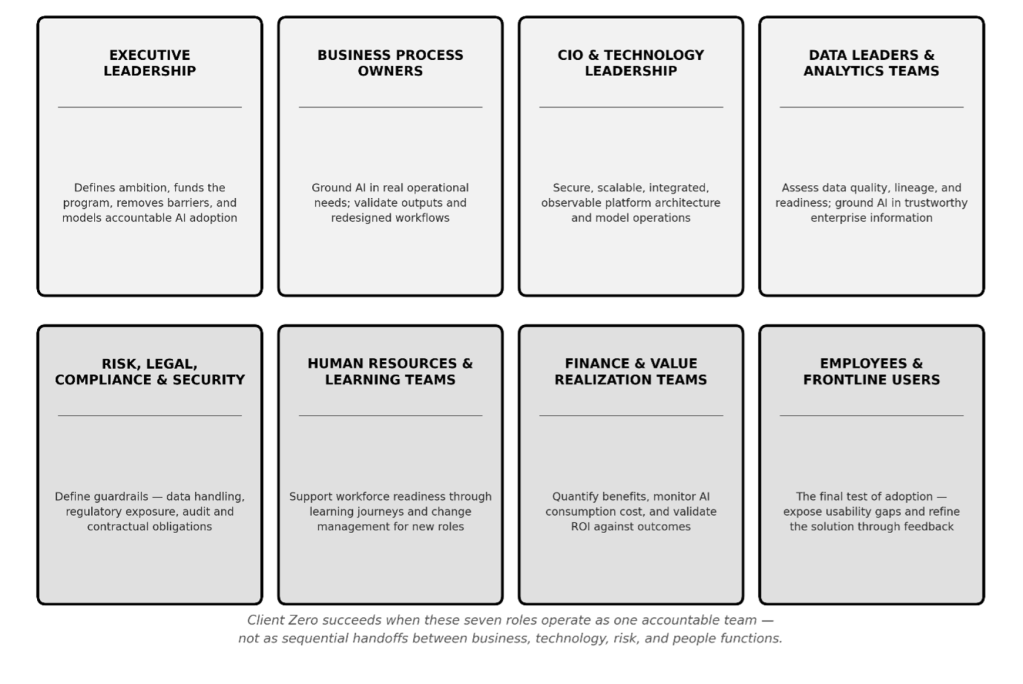
Figure 2: Stakeholders in Client Zero strategy.
Magesh Kasthuri
The chief information officer and technology leadership provide the engineering backbone of the strategy. They ensure that AI solutions are secure, scalable, integrated, observable and reliable. Their teams define platform architecture, integration standards, identity controls, model operations, resilience practices and technical debt management. Without this discipline, Client Zero may produce attractive prototypes that fail under enterprise demand. Microsoft, IBM and NIST guidance all reinforce the importance of secure architecture, operational monitoring and accountable lifecycle management.
Data leaders and analytics teams are equally important. They assess data quality, lineage, access rights, metadata, governance and readiness for AI consumption. They also help determine whether a use case should rely on structured data, unstructured content, knowledge graphs, retrieval techniques or a combination of sources. Their role is to make sure AI outputs are grounded in trustworthy enterprise information rather than fragmented or outdated content.
Risk, legal, compliance, privacy and security stakeholders define the guardrails that make AI adoption responsible. They review data handling, regulatory exposure, ethical implications, intellectual property concerns, audit requirements, contractual obligations and cyber risks. Their early involvement helps avoid the common problem of discovering compliance gaps after a solution has already gained momentum. In a mature Client Zero model, these teams are not blockers; they are design partners. This view is consistent with guidance from IBM, Microsoft, NIST and the World Economic Forum, which all treat governance as a practical enabler of trustworthy AI adoption.
Human resources and learning teams support workforce readiness. They help employees understand how AI changes roles, skills, career paths and performance expectations. They can design targeted learning journeys, identify new capability needs and support managers in leading teams through change. Their contribution is critical because Client Zero transformation is not only a technology shift; it is also a behavioral and cultural shift.
Finance and value realization teams track the economic discipline of the program. They help quantify benefits, validate savings, monitor AI consumption costs and compare investment against outcomes. Their involvement ensures that productivity claims are defensible and that scaling decisions are based on evidence rather than enthusiasm. In AI programs, this role is especially important because value may appear in different forms, including saved hours, faster cycle time, improved quality, risk reduction and better customer experience. McKinsey, Deloitte and TechTarget all highlight cost management, ROI discipline and value realization as core elements of enterprise AI scaling.
Employees and frontline users are the final test of whether Client Zero is working. They experience the solution in daily work, expose usability issues, identify missing context and reveal where AI helps or distracts. Their feedback should be treated as strategic input. A Client Zero strategy becomes stronger when employees are not passive recipients of AI, but active contributors to its refinement.
Conclusion
A Client Zero strategy gives enterprises a grounded, credible and disciplined path for AI transformation. It replaces abstract ambition with lived experience. By applying AI internally first, the organization learns how to create value, where risks emerge, which controls are necessary and how employees adapt to new ways of working. The approach also strengthens market credibility because the enterprise can speak from evidence rather than assumption.
For enterprise AI to scale responsibly, Client Zero must be treated as a strategic operating model, not a branding exercise. It requires executive sponsorship, strong governance, platform discipline, workforce enablement and rigorous value measurement. When these elements come together, the organization not only transforms itself but also creates a practical blueprint that others can trust, adapt and scale.
This article was made possible by our partnership with the IASA Chief Architect Forum. The CAF’s purpose is to test, challenge and support the art and science of Business Technology Architecture and its evolution over time as well as grow the influence and leadership of chief architects both inside and outside the profession. The CAF is a leadership community of the IASA, the leading non-profit professional association for business technology architects.