There’s something very attractive about saying “we embed very closely with our customers and just figure it out with them”, especially since the company that started “forward deploying engineers” is growing 84% with $5B+ revenue. But “forward deployed engineer” is a vague term and means different things depending on the business you’re running.
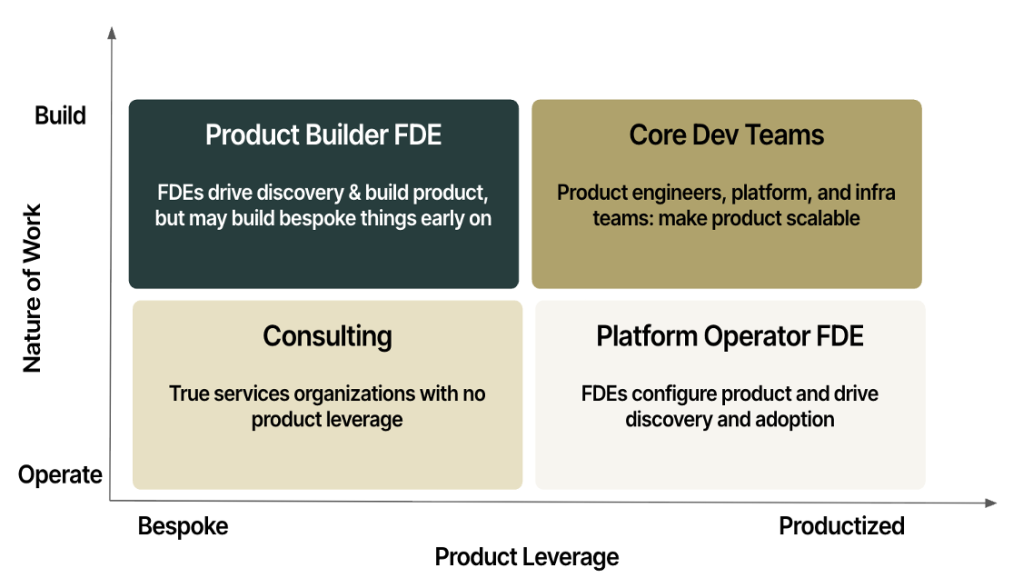
I spent almost 5 years at Palantir as a forward-deployed software engineer, and Palantir’s version of an “FDE” does not make sense for most companies I now meet as an early-stage VC. Depending on the type of business you’re building, this role could broadly mean one of two things: “the product builder” or “the platform operator.” Clearly defining which bucket you fall into will make it easier to hire for this role and run your FDE org.
Kabir Sial
The product builder: The OG Palantir version
The north star is: do whatever it takes to actually solve the user’s problem. FDEs are not just responsible for making the platform work, but also discovering what to build and building it (actually creating software) in service of the customer.
The platform operator: Solutions + technical customer success
The north star is: make the product work for the customer – deploy and operationalize it. This is what most startups today really mean when they want FDEs. FDEs here configure the core platform, manage account relationships and drive adoption. This is not new – companies have always had solutions engineers, sales engineers, customer success etc., although the work looks different as FDEs are increasingly building prototypes, configuring evals and building MCPs.
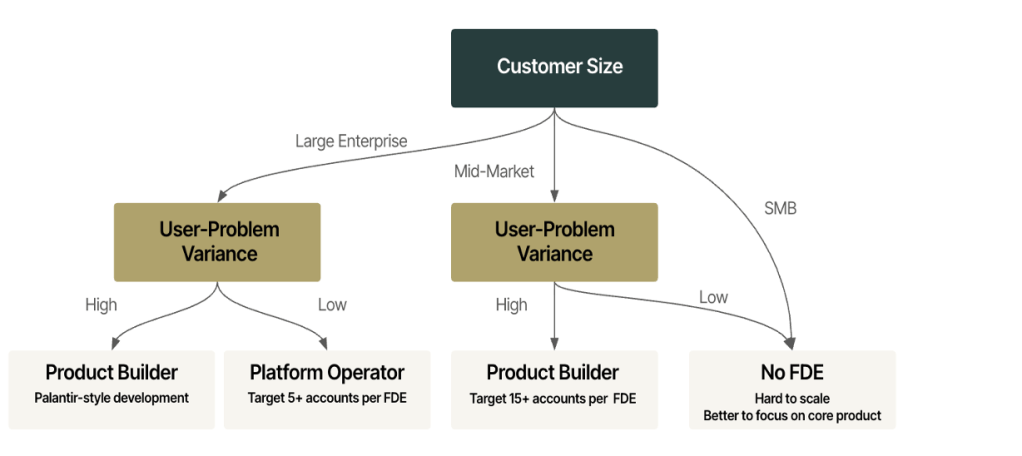
Which FDE is right for you
Kabir Sial
For most situations, hiring product builder FDEs is a mistake.
At scale, the FDEs should be the platform operator. It’s hard to have FDEs build and maintain highly custom product features, especially as the company scales. Over time, the custom product surface area distracts from building the core product, even though AI coding tools make it easy to ship new features quickly and maintain them.
Many fast-growing AI startups recognize these constraints and structure the FDE role more like the platform operator. This also allows them to have 5-10 accounts per FDE, which is a much higher ratio than Palantir had (at least in 2023). Even the Palantir FDE role has evolved to look more like the platform operator.
There are, however, situations when your FDEs should be the product builder archetype.
1. You have very large customers (F500 scale)
Technical complexity: Large customers have complex environments with legacy infrastructure that often requires “out-of-platform” engineering work. I often encountered bespoke data infrastructure, privacy requirements, etc. at various Palantir customers that required me to build “out-of-platform” connectors, UIs and backends.
Organizational inertia and trust: Serving large enterprises is about building trust. In short time periods, overfitting product to a specific user/workflow is often what delivers the most value, builds trust and helps organizations get over the inertia of moving away from Excel and legacy software tools that are part of their day-to-day workflow. For AI-native startups, it’s arguably even more important to invest in doing “unscalable” development with engineering boots on the ground, as it helps solidify your right to exist and eventually expand the customer relationship.
2. You have many ICPs and workflows
If you have a broad range of ICPs and workflows that you serve, your product probably is not walk-up usable on day 1 of deployment. The short-term hacky things that product builder FDEs build to make the product work for these heterogeneous users/workflows will help you shape the product long-term.
Kabir Sial
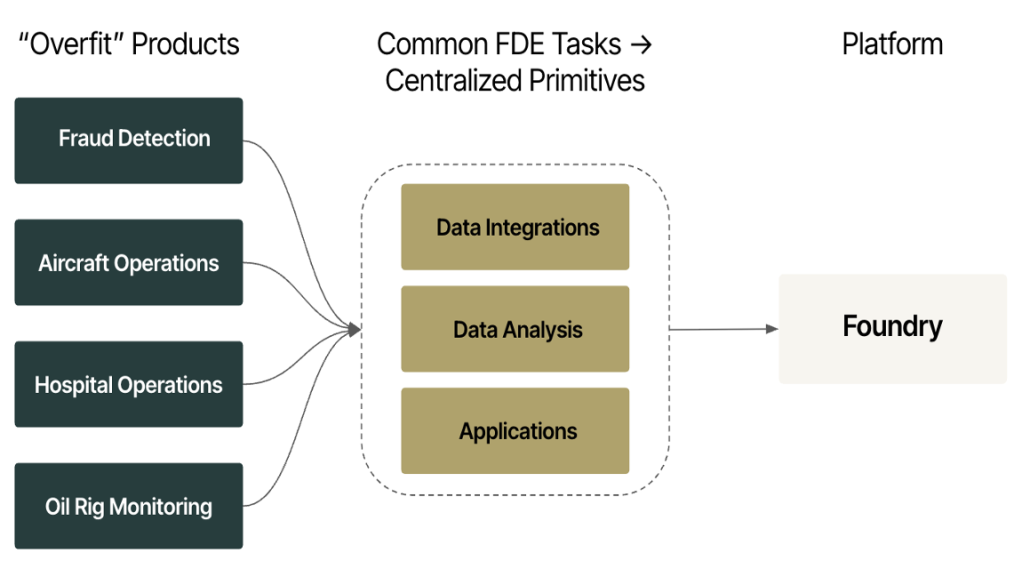
Note: see Palantir Foundry’s architecture here.
This was a big reason why Palantir FDEs were more like product builders (and are still able to – see the Forward Deployed Software Engineer job profiles as an example). The vision for Foundry was to be the operating system for an enterprise’s critical decisions – inherently multiple industries, users and workflows. A lot of FDE-led development showed that solving many of these use cases required complex data integrations, which led to the early versions of Foundry being best-suited for complex data integrations and building a customer’s “Ontology”. Similarly, FDEs like myself built custom frontend applications for fraud analysis, pricing, etc. As certain patterns of what these applications required became more clear, they were centralized into an application-layer product.
Who you should hire
Kabir Sial
Kabir Sial
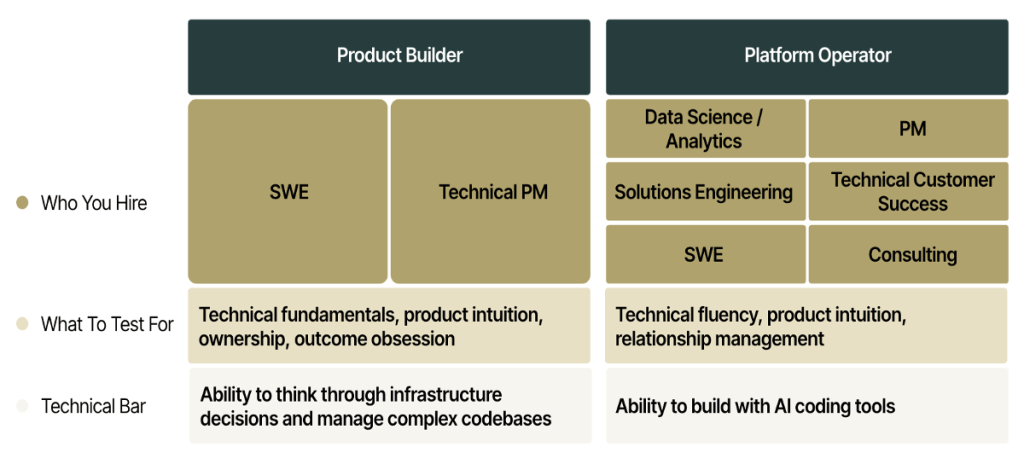
Platform operator: There is a much broader set of people you could hire, testing for technical fluency (e.g., being good at data analysis, complex Excel work, even SQL), product intuition and an inclination to build customer relationships. Backgrounds like technical customer success, solutions engineering, software engineering, product management and consulting are all strong fits.
Product builder: You want candidates that are high ownership and missionary software engineers, or technical PMs who want to ship products themselves.
Hiring for these profiles, especially product builders, is hard. It’s worth calling out two things that helped Palantir hire software engineers into what might be considered a less sexy role.
- Culture of building at the edge: Strong engineers are motivated to build things. Palantir gave FDEs a lot of ownership to build products, which is why much of the core product leadership was former FDEs.
- Cult built around mission: Internally, there was a cult-like devotion to the mission. Everyone always talked about why outcomes were far more important than software, and why most companies building tools had it wrong. I’ve never been at a company where people feel so closely bonded around a mission.
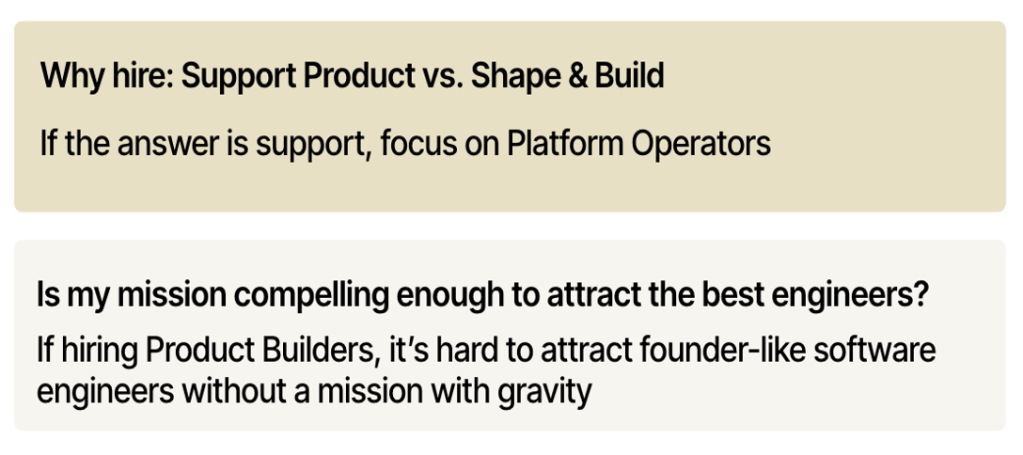
As founders building AI startups think about hiring FDEs, it’s worth being specific about your culture and asking: Am I just hiring people to support development teams, or am I hiring people to shape and build product? It’s hard to get software engineers (even today) to be excited about an FDE role that might just be technical customer success.
What FDEs should be doing (regardless of archetype)
You’ve hired the right people. How do you best leverage your team of FDEs?
FDEs were Palantir’s way of delivering outcomes rather than tools. AI-native startups can take this much further and FDEs can help in a few unique ways by leveraging their proximity to customers.
- Find the most critical workflows: As AI lowers the cost of producing software, companies will face a lot more competition. FDEs at AI startups should be constantly finding ways to serve the most critical workflows for a customer and paying attention to how customers do work across newer and legacy tools. For example, FDEs at Harvey should pay attention to which workflows are in Westlaw, which ones are moving to ChatGPT/Claude, and how the Harvey product can stay ahead.
- Build around nondeterminism: In more regulated environments, FDEs should be hyper-focused on making products reliable for specific use cases using evals and configs. Previously, product reliability lived with product and support. As companies provide outcomes instead of tools, configuring products appropriately and managing evals shifts towards FDE teams.